Room by room
You do not think in disciplines. You think in rooms.
Nobody wakes up wanting “distributed video”. They want the kitchen to play music and the office to stop dropping calls. Here is the same work, arranged the way you actually experience it.
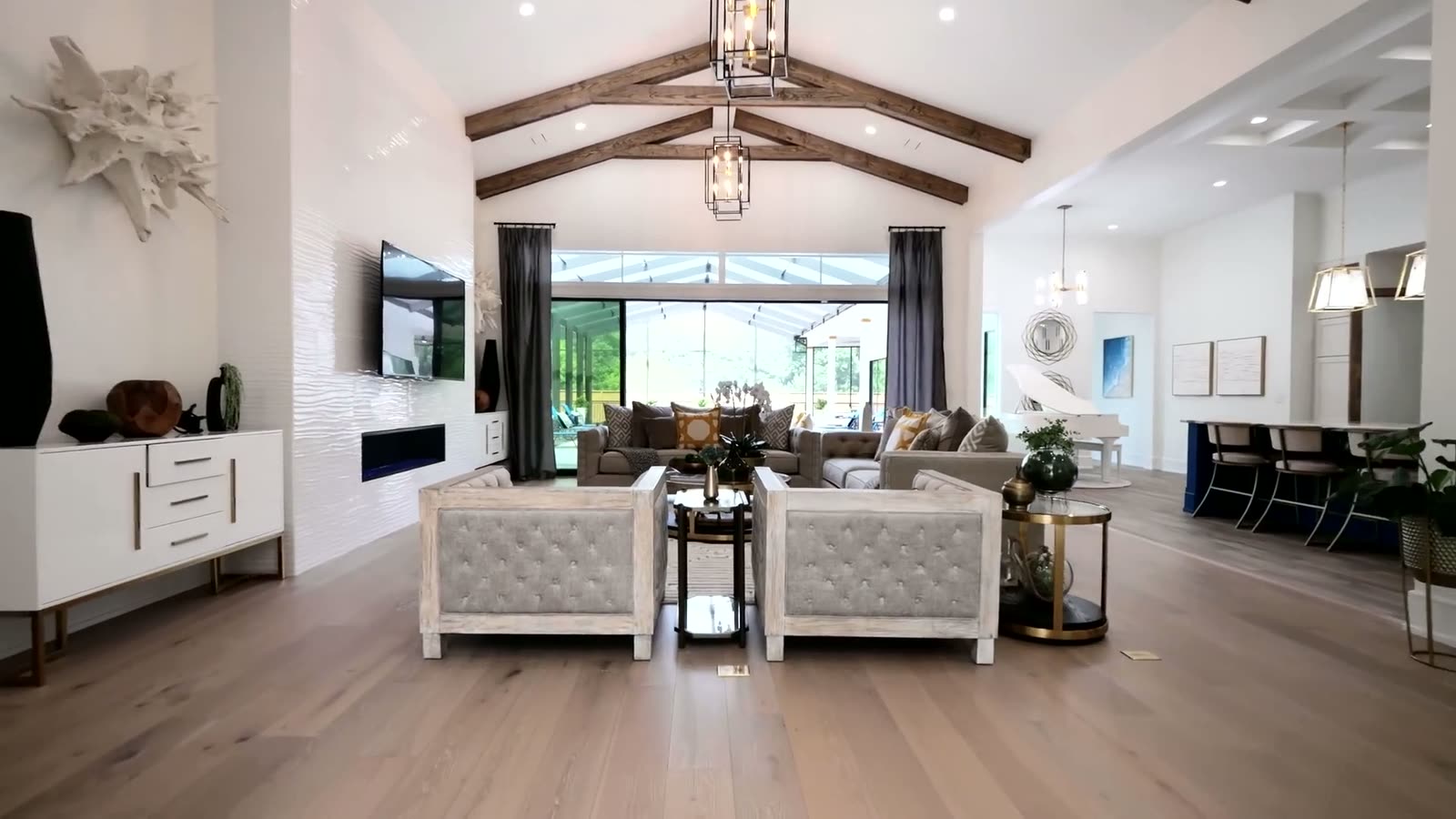
Living Room
The room everyone judges the system by.
The most-used room in the house and usually the worst-served — a television on a wall, a soundbar, and four remotes on the coffee table. It should be one button.
- Display sized and mounted to the seating, not to the wall stud
- In-ceiling or on-wall speakers with the electronics hidden
- Every source on one remote a guest can use
- Lighting scene that drops when the film starts
- Motorised shades on the glare-facing windows
The standard
The best technology in a house is the technology you cannot see.
Every room above is designed to the same rule: the experience should be obvious and the equipment should be invisible.
- Speakers finished into the ceilingFlush-mounted, painted to the ceiling colour, and level-matched so you cannot tell which one you are hearing.
- Electronics in another roomRacks live in a closet or basement. You should hear the film, not the cooling fans.
- No visible cable, anywhereIn-wall boxes and recessed outlets behind every display, on drywall, brick or stone.
- Keypads instead of screensA wall control a guest understands beats an app they have to be given access to.
- Nothing that demands attentionNo blinking blue LEDs across the ceiling. Status lights get dimmed or disabled at commissioning.
The other way in
Or browse by what it is.
Same work, sorted by discipline rather than by room.
Tell us about your rooms
6 rooms above, five disciplines, one team.